

Close Menu
  • News
      • Appointments
      • EV Powertrain
      • Emissions
      • Engine Components
      • Electronics
      • Facility Developments
      • Forced Induction
      • Fuel Cell Technologies
      • Fuels & Lubricants
      • Heavy-duty & Diesel Engine Technologies
      • Hybrid Powertrain Technologies
      • Industry Forecasting
      • Legislation
      • Materials & Surface Treatment
      • Metallurgy
      • Mild-hybrid & 48V Technologies
      • New powertrain
      • Partnerships, Investments & Acquisitions
      • Quality Control
      • Prototyping
      • Sustainable fuels
      • Testing
      • Traction Control Systems
      • Transmissions Technologies
      • Webinars
  • Features
  • Online Magazines
    • April 2026
    • January 2026
    • September 2025
    • June 2025
    • March 2025
    • January 2025
    • September 2024
    • Subscribe to Automotive Powertrain Technology
    • Transmission Technology International
    • Subscribe to Transmission Technology
  • Opinion
  • Supplier Spotlight
  • Webinars
Facebook X (Twitter) Instagram
  • Automotive Interiors
  • Automotive Testing
  • Autonomous Vehicle
  • Professional Motorsport
  • Tire Technology
  • Media Pack
LinkedIn
Subscribe
Automotive Powertrain Technology International
  • News
      • Appointments
      • EV Powertrain
      • Emissions
      • Engine Components
      • Electronics
      • Facility Developments
      • Forced Induction
      • Fuel Cell Technologies
      • Fuels & Lubricants
      • Heavy-duty & Diesel Engine Technologies
      • Hybrid Powertrain Technologies
      • Industry Forecasting
      • Legislation
      • Materials & Surface Treatment
      • Metallurgy
      • Mild-hybrid & 48V Technologies
      • New powertrain
      • Partnerships, Investments & Acquisitions
      • Quality Control
      • Prototyping
      • Sustainable fuels
      • Testing
      • Traction Control Systems
      • Transmissions Technologies
      • Webinars
  • Features
  • Online Magazines
    1. April 2026
    2. January 2026
    3. September 2025
    4. June 2025
    5. March 2025
    6. January 2025
    7. September 2024
    8. Subscribe to Automotive Powertrain Technology
    9. Transmission Technology International
    10. Subscribe to Transmission Technology
    Featured

    In this Issue – April 2026

    By Web TeamMay 1, 2026
    Recent

    In this Issue – April 2026

    May 1, 2026

    In this Issue – January 2026

    December 3, 2025

    In this Issue – September 2025

    September 25, 2025
  • Opinion
  • Supplier Spotlight
  • Webinars
LinkedIn Facebook
Subscribe
Automotive Powertrain Technology International
Fuel Cell Technologies

Mahle and Liebherr Machines Bulle collaborate on hydrogen engines

Lawrence ButcherBy Lawrence ButcherOctober 14, 20212 Mins Read
LinkedIn Twitter Facebook Email
Share
LinkedIn Twitter Facebook Email

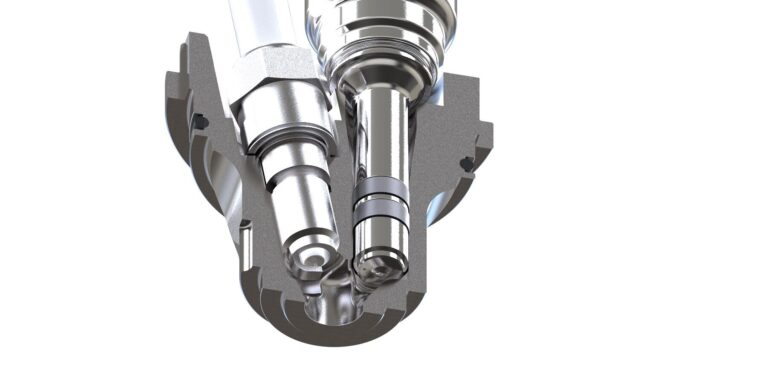
Automotive supplier Mahle Powertrain is supporting Liebherr Machines Bulle in its development of hydrogen-fueled internal combustion engines, specifically through the use of Mahle’s pre-chamber jet ignition system. According to Mahle, tests have shown that by using this technology, the mixture of hydrogen and air can be ignited and burned at a high compression ratio while retaining combustion stability.

“The use of hydrogen as a combustion fuel has the potential to make many heavy-duty and off-road applications climate-neutral quickly,” said Peter Wieske, director, corporate advanced engineering, Mahle. “A large number of studies in recent decades have shown that hydrogen can be used in internal combustion engines without any problems.”

“The expertise of Liebherr’s engineering teams in off-highway engine combustion and research on alternative fuels has been critical in this project,” added Bouzid Seba, head of predevelopment at Liebherr Machines Bulle.

To achieve stable operation with a high compression ratio while avoiding engine knock and pre-ignition, hydrogen engines must be operated with a large amount of excess air. The energy from a conventional spark plug is not enough to ignite such a mixture. Jet ignition solves the problem by burning a small amount of an ignitable mixture in a prechamber cylinder. The resulting gas plasma is passed through small openings into the main combustion chamber and, due to its high energy content, rapidly and evenly ignites the main gas mixture.

Mahle notes that hydrogen engines are ideal for high load cycles with sudden load changes and cope well with heat, dust and vibrations. This makes them an excellent choice for use in heavy-duty and off-road applications, where fuel cells hit their limits more quickly.

Share. LinkedIn Twitter Facebook Email

Related Posts

Maserati Nettuno engine transformed into 480kW hydrogen race unit

May 29, 2026

TotalEnergies and Stellantis expand engine oil partnership

May 29, 2026

Volvo Trucks expands future mobility strategy with multifuel combustion engine platforms

May 14, 2026
LATEST NEWS

Ferrari unveils all-electric Luce

May 29, 2026

Scania under-cab battery module and Megawatt Charging System available for order

May 29, 2026

Maserati Nettuno engine transformed into 480kW hydrogen race unit

May 29, 2026

Receive breaking stories and features in your inbox each week, for free


Enter your email address:


Supplier Spotlights
  • ÖVK (Austrian Society of Automotive Engineers)
Featured Listings
  • There are currently no listings to show.
Getting in Touch
  • Contact Us
  • Media Pack
  • Meet the Editors
  • Free Weekly E-Newsletter
Our Social Channels
  • LinkedIn
Related UKi Topics
  • Automotive Interiors
  • Automotive Testing
  • Autonomous Vehicle
  • Professional Motorsport
  • Tire Technology
  • Media Pack
© 2026 UKi Media & Events a division of UKIP Media & Events Ltd
  • Terms and Conditions
  • Privacy Policy
  • Cookie Policy
  • Notice and Takedown Policy

Type above and press Enter to search. Press Esc to cancel.